






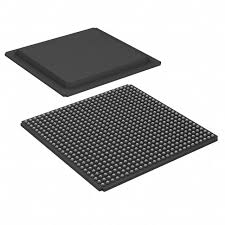
XCZU21DR-2FFVD1156I
Hersteller: AMD (Xilinx)
RFSoC ADC-Kanäle: 8
RFSoC DAC-Kanäle: 8
Paket: FFVD1156
Betriebstemperatur: Industriell (-40°C bis +100°C)
Spezifikationen
Part Number Detailed Explanation
This is AMD Xilinx Zynq UltraScale+ RFSoC heterogeneous MPSoC built on 16nm FinFET process, integrating ARM processing system, programmable FPGA logic and integrated RF analog converters, oriented to portable, low-power miniature wireless devices and compact radar terminals.
- XCZU21DR: Entry-level RFSoC chip with built-in multi-channel high-speed RF ADC/DAC
- -2: Speed Grade 2, mainstream high-performance timing grade with sufficient timing margin for lightweight baseband algorithm design
- FFVD1156: 1156-ball flip-chip FCBGA compact package
- I: Industrial temperature grade, junction temperature operating range: -40°C ~ +100°C
Vollständige On-Chip-Hardwarearchitektur
1. Verarbeitungssystem (PS: ARM-Prozessorsubsystem)
- Quad-core ARM Cortex-A53 application processors, used to run embedded Linux, communication protocol stacks and upper application tasks
- Dual-core lockstep ARM Cortex-R5F real-time cores for low-latency real-time control, system fault diagnosis and safety scheduling
- Mali-400 MP2 lightweight GPU for simple graphical interface output
- Embedded dedicated hardware video codec unit to support video encoding and decoding
- Standard peripheral resources: Gigabit Ethernet, USB 3.0, SD controller, CAN, UART, SPI, I2C and other industrial universal interfaces
- On-chip hardware security module: secure boot, 256-bit AES encryption, bitstream anti-tampering protection
2. Programmable Logic Fabric (PL: FPGA Domain)
- Total Logic Cells: 278,400
- DSP48E2 arithmetic units: 1120 units, deployed for FFT calculation, digital filtering, signal modulation/demodulation and lightweight matrix operations
- Total Block RAM + UltraRAM capacity: 24.12 Mbit
- Multiple MMCM & PLL clock management tiles, supporting clock multiplication, division, phase offset adjustment and jitter suppression to meet multi-clock domain timing requirements
- Configurable I/O banks, compatible with LVCMOS, LVDS and various differential signal electrical standards
3. On-Chip RF Analog Subsystem (Core RFSoC Feature)
Integrated high-speed radio frequency sampling converters on die, eliminating the need for external discrete ADC/DAC chips and greatly simplifying RF circuit layout:
- 8-Kanal-14-Bit-ADC, maximale Abtastrate pro Kanal 5 GSPS
- 8-Kanal-14-Bit-DAC, maximale Aktualisierungsrate pro Kanal 10 GSPS
- Built-in digital down converters (DDC), digital up converters (DUC) and automatic gain control modules to complete on-chip frequency conversion and gain regulation of RF signals
4. Serielle Hochgeschwindigkeits-Transceiver
12 GTY high-speed differential transceivers, maximum per-lane transmission rate up to 32.75 Gbps. It supports PCIe Gen4, JESD204B/C, high-speed inter-board data transmission protocols.
Technische Daten zum Netzteil
Independent power domains are designed for PS, PL, RF analog circuits and high-speed transceivers. Typical core logic voltage is 0.85 V; dynamic voltage and frequency scaling can be enabled to reduce power consumption under light load.
Typical overall power consumption ranges from 12 W to 30 W, adaptable to passive heat sink cooling schemes for miniature equipment.
Packaging & SMT Assembly Specifications
- Package: 1156-pin compact flip-chip FCBGA ball grid array
- Moisture Sensitivity Level: MSL3. All reflow soldering processes must be finished within 168 hours after vacuum packaging is opened
- Lead-free packaging, fully compliant with global RoHS environmental directives
- Packaged in anti-static trays for automated industrial PCB mass production
Environmental & Reliability Performance
Stable continuous operation under wide temperature variation and intense electromagnetic interference environments.
Supports SEU radiation error correction, dual R5F core lockstep redundancy, AES bitstream encryption and anti-tampering functions, satisfying high reliability demands of military portable terminals, aerospace and outdoor industrial devices.
Typische Anwendungsbereiche
- Indoor small cell base stations, portable wireless communication access equipment
- Miniature software-defined radio (SDR), handheld wireless signal testing terminals
- Short-range ranging radar, miniature airborne radar front-end and signal processing modules
- Portable electronic warfare signal monitoring, interception and reconnaissance devices
- Aerospace miniature onboard communication and remote sensing signal acquisition equipment
- Handheld spectrum analyzers, portable vector signal generators and compact communication test instruments


