





| MODEL P/N | SERIES | NUMBER OF LABS/CLBS | SPEED GRADE | NUMBER OF LOGIC ELEMENTS / CELLS | TOTAL RAM BITS | NUMBER OF I/O | VOLTAGE – SUPPLY | MOUNTING TYPE | OPERATING TEMPERATURE | PACKAGE / CASE | SUPPLIER DEVICE PACKAGE |
|---|---|---|---|---|---|---|---|---|---|---|---|
| XC5VSX50T-2FFG665C | Virtex-5 SX | 4.080,00 | -2,00 | 52224 | 4866048 | 360 | 0.95 V – 1.05 V | Surface Mount | 0 °C – +85 °C (C) | 665-FBGA / FCBGA | 665-FCBGA (27 × 27 mm) |
XC5VSX50T-2FFG665C
Manufacturer: Xilinx
Logic Cells: 52,224
Logic Slices: 8,160
Embedded RAM (eRAM): 1,728 Kb
Package: FFG665 (Flip-Chip BGA)
Operating Temperature: Commercial (0°C to +85°C)
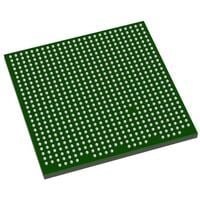
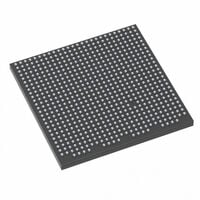
Specifications
What is XC5VSX50T-2FFG665C?
The XC5VSX50T-2FFG665C is a digital signal processing-optimized FPGA from the Virtex-5 SX family developed by Xilinx (now part of AMD).
This device integrates programmable logic, dedicated DSP48E processing blocks, embedded memory, and high-speed connectivity. It is commonly used in telecommunications infrastructure, industrial signal processing equipment, radar systems, and high-speed data acquisition platforms where deterministic hardware processing is required.
Key features:
-
Virtex-5 SX FPGA architecture
-
~52K logic cells
-
288 DSP48E slices
-
665-pin FFG BGA package
-
Commercial temperature range
-
High-performance -2 speed grade
This section helps search engines generate AI Overview answers and featured snippets.
Product Overview
The XC5VSX50T-2FFG665C belongs to the Virtex-5 SX FPGA series from Xilinx. Unlike general-purpose FPGAs, the SX family was specifically designed for applications where digital signal processing performance is critical.
At the architectural level, the device integrates a dense array of DSP48E slices. These dedicated hardware blocks are optimized for multiply-accumulate operations, which are commonly used in filtering, FFT processing, modulation algorithms, and real-time signal analysis.
The FFG665 package provides a flip-chip BGA design with 665 pins. This package format supports compact board layouts while maintaining signal integrity for high-speed interfaces and parallel processing pipelines.
With the -2 speed grade, the XC5VSX50T-2FFG665C supports faster timing performance compared with the -1 variant. Engineers typically choose this grade for applications where higher clock speeds or lower processing latency are required.
Although newer FPGA architectures exist today, the Virtex-5 SX series remains widely deployed in telecom and industrial equipment. Many systems continue to rely on the XC5VSX50T-2FFG665C for maintenance, spare parts programs, and extended production cycles.
Technical Specifications
| Parameter | Specification |
|---|---|
| Manufacturer | Xilinx |
| FPGA Family | Virtex-5 SX |
| Part Number | XC5VSX50T-2FFG665C |
| Logic Cells | ~52,000 |
| DSP Slices | 288 DSP48E |
| Block RAM | ~4.7 Mb |
| Package | FFG665 (Flip-Chip BGA) |
| Pin Count | 665 |
| Speed Grade | -2 |
| Temperature Grade | Commercial |
| Process Technology | 65 nm |
| High-Speed Transceivers | RocketIO |
| Typical Applications | DSP processing, telecom infrastructure |
Typical Engineering Applications
The XC5VSX50T-2FFG665C is designed for systems where parallel processing and deterministic timing are important.
Common applications include:
-
Wireless baseband processing
-
Software-defined radio (SDR) platforms
-
Industrial automation controllers
-
Radar signal processing systems
-
Medical imaging equipment
-
High-speed data acquisition platforms
-
Test and measurement instruments
Because FPGA hardware can process data streams in parallel, it is well suited for workloads that require low latency and high throughput.
Engineer Experience Section
During the period when Virtex-5 devices were widely adopted, many engineering teams implemented complete signal processing chains directly inside FPGA hardware.
Functions such as digital filtering, modulation, packet inspection, and channel coding were mapped to DSP48E slices, allowing complex processing pipelines to run at deterministic speeds without relying on external processors.
These systems are still deployed globally in telecom infrastructure and industrial platforms. For that reason, devices like the XC5VSX50T-2FFG665C remain important for engineers responsible for long-term system support and hardware maintenance.
Replacing the FPGA in these systems often requires redesigning the PCB and rewriting FPGA firmware, which is why sourcing the original device remains the preferred option.
Replacement / Cross Reference Models
When searching for compatible devices, engineers may compare the XC5VSX50T-2FFG665C with other Virtex-5 models.
Possible related devices include:
-
XC5VSX50T-1FFG665C
-
XC5VSX50T-2FFG665I
-
XC5VSX50T-1FFG665I
-
XC5VSX95T-2FF1136I
-
XC5VFX70T-2FFG1136I
Differences between these models may include:
-
Speed grade
-
Package type
-
Temperature range
-
DSP resource availability
Always verify system compatibility before selecting a replacement FPGA.
Procurement Information
Procurement specialists typically search this FPGA using queries such as:
-
XC5VSX50T-2FFG665C stock
-
XC5VSX50T-2FFG665C price
-
XC5VSX50T-2FFG665C datasheet
-
buy XC5VSX50T-2FFG665C FPGA
-
XC5VSX50T-2FFG665C distributor
-
XC5VSX50T-2FFG665C supplier
Distributors specializing in legacy semiconductor supply, such as LXB Semicon, often support customers looking for hard-to-find FPGA components and long-lifecycle industrial parts.
FAQ Section
What is XC5VSX50T-2FFG665C?
The XC5VSX50T-2FFG665C is a Virtex-5 SX FPGA designed for digital signal processing applications. It integrates programmable logic, DSP48E slices, block RAM, and high-speed serial connectivity.
What does FFG665 mean?
FFG665 refers to the package type used by the FPGA. It is a flip-chip BGA package with 665 pins designed for high-density PCB layouts.
What is the difference between -1 and -2 speed grades?
The -2 speed grade generally supports higher operating frequencies and faster timing performance compared with the -1 speed grade.
Is Virtex-5 still used today?
Yes. Many telecom and industrial platforms still operate with Virtex-5 FPGAs. These devices are often sourced for maintenance, repair programs, and long-lifecycle equipment support.


