





| MODEL P/N | SERIES | NUMBER OF LABS/CLBS | SPEED GRADE | NUMBER OF LOGIC ELEMENTS / CELLS | TOTAL RAM BITS | NUMBER OF I/O | VOLTAGE – SUPPLY | MOUNTING TYPE | OPERATING TEMPERATURE | PACKAGE / CASE | SUPPLIER DEVICE PACKAGE |
|---|---|---|---|---|---|---|---|---|---|---|---|
| ADSP-TS203SABPZ-050 | ADSP-TS203S (TigerSHARC-S) | 0,00 | 500,00 | N/A | 4 Mbit on-chip DRAM | 0 | Typical device rails per datasheet (VDD_IO ≈2.5 V, core rails per variant) | Surface mount | −40 °C to +85 °C | 576-ball BGA | 576-BGA (BP-576) |
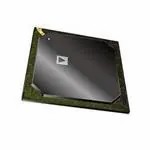
ADSP-TS203SABPZ-050
Manufacturer: Analog Devices
Logic Cells: бк
Logic Slices: бк
Embedded RAM (eRAM): 24 Mbits On-Chip SRAM
Package: SABP
Operating Temperature: ?40°C to +85°C
Specifications
Part Number Definition
ADSP-TS203SABPZ-050 is a TigerSHARC architecture high-performance floating-point digital signal processor developed for intensive real-time signal processing tasks.
The suffix Z indicates lead-free construction; AB corresponds to standard industrial temperature grade, BP stands for 576-ball enhanced thermal BGA package with 25mm × 25mm outline dimension. 050 represents the rated core operating frequency of 500 MHz. The component is supplied in anti-static tray packaging for PCB assembly production.
Core Electrical Performance Parameters
Built on superscalar static architecture, this DSP supports simultaneous fixed-point and IEEE-compliant floating-point calculations, tailored for heavy algorithm computation in professional embedded systems.
The processor runs at 500 MHz with a 2 nanosecond instruction cycle. Two independent arithmetic processing units are integrated inside the chip, each fitted with multiplier, ALU and dedicated register sets. Dual address generators accelerate memory addressing operations, and SIMD parallel execution greatly enhances overall computing throughput.
Supported data formats include 8-bit, 16-bit, 32-bit, 64-bit fixed-point values, 32-bit single-precision floating-point numbers and 40-bit extended precision floating-point numbers.
Total on-chip embedded memory reaches 4 Mbits, split into four independent memory banks that can be freely assigned for program storage and data buffering. Internal 128-bit wide buses deliver a peak memory access bandwidth of 32 GB/s.
Peripheral resources include ten independent DMA channels to complete background data transmission without occupying core computing resources. Two dedicated high-speed link ports enable direct interconnection between multiple DSP chips for multi-processor array construction. An integrated SDRAM controller, dual programmable hardware timers, general-purpose flag pins and IEEE 1149.1 standard JTAG debug interface are also embedded.
Power specifications: core supply voltage is 1.05 V, peripheral I/O supply voltage is 2.5 V. There is no internal nonvolatile storage, so application programs must be loaded from external memory devices after power-up.
Packaging and Assembly Specifications
Housed in a 576-ball thermal enhanced BGA surface-mount package measuring 25mm × 25mm. The large bottom thermal pad effectively dissipates heat under sustained full-load operation and optimizes grounding integrity for high-speed digital circuits.
Moisture Sensitivity Level is MSL3. All reflow soldering procedures must be completed within 168 hours once the vacuum packaging seal is broken. Original packing is anti-static tray packaging, applicable to mass industrial circuit board production.
Environmental and Compliance Standards
The device maintains stable performance across the temperature range from -40°C to +85°C, suitable for airborne electronics, ground radar systems, medical imaging equipment and industrial control devices exposed to wide temperature variation and intense electromagnetic interference.
Adopted lead-free semiconductor manufacturing technology, fully compliant with global RoHS environmental requirements. Though this model has been phased out of mass production, its stable architecture is still widely adopted for maintenance, spare parts replacement and renovation of legacy professional signal processing equipment.
Typical Application Fields
Radar echo signal processing, beam forming and target detection systems
Medical ultrasonic, CT and MRI imaging real-time data computing modules
Underwater sonar acoustic signal acquisition and post-processing equipment
Wireless communication large-channel demodulation, equalization and decoding units
Aerospace airborne navigation and remote sensing data embedded processing systems
High-end oscilloscopes, spectrum analyzers and professional signal generation test instruments


