





How Engineers and Buyers Source Virtex-5 FPGAs
A Practical Guide to Devices Like XC5VLX110 and XC5VSX240T
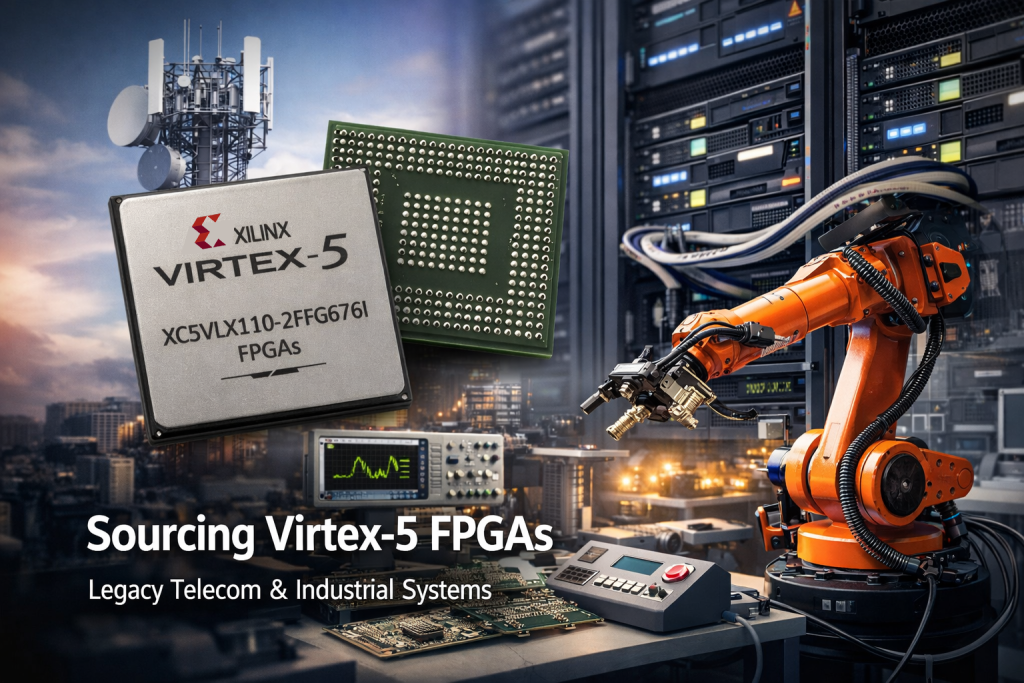
Even though newer FPGA generations are widely available today, many engineering teams still rely on the Virtex-5 series developed by Xilinx. Devices such as XC5VLX110, XC5VSX50, and XC5VSX240T remain common in telecom infrastructure, industrial systems, and high-performance embedded hardware.
At LXB Semicon, we frequently receive inquiries for Virtex-5 parts used in long-lifecycle equipment. Engineers are not necessarily looking for the newest FPGA architecture—they are usually trying to maintain, repair, or expand an existing hardware platform that was originally designed around this generation of devices.
This article explains why Virtex-5 FPGAs are still relevant, which models are most commonly sourced, and how engineers typically evaluate replacement options.
Why Virtex-5 FPGAs Are Still in Demand
The Virtex-5 architecture introduced several improvements compared with earlier FPGA generations, including a 65 nm process node, improved routing architecture, and better power efficiency.
For many systems built between 2008 and 2015, Virtex-5 provided an excellent balance of:
Logic density
Embedded DSP capability
Block RAM resources
Reliable long-term performance
Because telecom equipment, industrial automation systems, and test platforms often remain in service for 10–20 years, many companies continue sourcing the same FPGA models originally used in their designs.
Common Virtex-5 FPGA Models Engineers Search For
Some of the most frequently requested devices include:
| FPGA Model | Typical Use Case |
|---|---|
| XC5VLX110 | Embedded computing and control systems |
| XC5VSX50 | Digital signal processing platforms |
| XC5VSX240T | Telecom and high-performance data processing |
| XC5VTX240T | High-speed networking equipment |
Each variant within the Virtex-5 family targets a slightly different design focus.
For example:
LX series emphasizes logic capacity
SX series focuses on DSP performance
TX series integrates high-speed serial transceivers
Understanding these differences is important when evaluating compatibility or potential replacements.
Typical Applications of Virtex-5 Devices
In practice, Virtex-5 FPGAs appear in a wide range of professional equipment. Some examples include:
Telecommunications infrastructure
Many base stations, optical transmission systems, and network switches were originally designed with Virtex-5 devices.
Industrial automation
Control systems, machine vision platforms, and industrial computing equipment often rely on FPGA-based processing.
Video and imaging systems
Virtex-5 devices provide enough bandwidth and memory resources for real-time image processing and broadcast hardware.
Test and measurement equipment
Many lab instruments use FPGA architectures for flexible digital signal processing.
Because these applications usually require long hardware lifecycles, sourcing the same FPGA model years later is very common.
Understanding Speed Grades and Package Variants
When searching for a specific FPGA device, engineers usually pay attention to three details:
Speed Grade
Speed grades such as -1 and -2 indicate performance levels.
For example:
-1 → Standard timing performance
-2 → Higher performance and faster timing margins
Designs that operate at higher clock frequencies often require the faster speed grade.
Package Type
Virtex-5 devices come in several package formats, such as:
FFG676
FFG1136
FFG1738
These are flip-chip BGA packages designed for high pin density and signal integrity.
Changing the package normally requires PCB redesign, so most engineers try to source the exact package used in the original design.
Temperature Grade
Industrial equipment often requires industrial-grade temperature ranges, which is why certain variants remain more difficult to source than commercial versions.
Evaluating Replacement or Cross-Reference Options
Sometimes the exact FPGA model is no longer available in large quantities. In that case, engineers may look at alternatives within the same family.
Possible evaluation factors include:
Logic cell count
Package compatibility
Speed grade requirements
Transceiver configuration
Firmware compatibility
In many cases, another device in the same Virtex-5 family can serve as a drop-in replacement if these parameters match.
Why Accurate FPGA Model Pages Matter
Another interesting trend we see in the component distribution industry is how engineers search for parts online.
Most searches follow a very simple format:
“XC5VLX110 datasheet”
“XC5VSX50 stock”
“XC5VSX240T price”
“Virtex-5 FPGA supplier”
Because of this, having clear model-specific information pages makes a significant difference in whether engineers can quickly find the part they need.
For FPGA distributors, building detailed product pages for each model helps both engineers and procurement teams locate reliable supply sources faster.
Supporting Legacy FPGA Platforms
Despite the rapid evolution of semiconductor technology, many industries still depend on stable hardware platforms developed years ago.
Virtex-5 FPGAs are a good example of this reality.
Whether the goal is maintaining telecom infrastructure, repairing industrial equipment, or supporting embedded computing systems, sourcing the right FPGA device remains critical for keeping these platforms operational.
At LXB Semicon, we continue to support customers looking for Virtex-5 devices and other legacy FPGA components used in long-lifecycle systems.